Perfume Retail Expansion Into Florist Shops
The floral market generated $12.18 billion in 2024 in the United States. Expanding your perfume brand’s retail presence into some of the 11,700 florist shops in the US can be a wonderful opportunity to build awareness and experiment with your perfume merchandising strategies.
For a retail expansion strategy, unless your brand is well-funded with a lot of brand recognition and a robust logistics system in place, you aren’t getting your brand into high-end/high-volume department stores. Finding the low-hanging fruit opportunities is how you gain your initial footing in retail in order to get your products onto better shelves.
The online marketplace for perfume is becoming more crowded every year for consumers to chose from. Perfume brands that run ads or compete for search engine visibility can appreciate how competitive the landscape is for getting shoppers’ attention. Social media is equally crowded with perfume brands facing an uphill battle of trying to get people’s attention and keep it. Retail expansion can be a great way to side step the crowded online beauty product landscape; however, getting onto retail shelves also comes with it’s own set of challenges.
Flower and Perfume Consumer Buying Data
There is a large overlap between florists shoppers and perfume buyers. Aside from both products having an olfactory sensation at the forefront of the purchasing decision, the demographic data for florist shop visitors also overlaps with people who buy perfume.
Demographic Overlap: Depending on age range, women buy between 65-85% of all flower arrangements in the United States. Women over the age of 55 spend the most money per floral arrangement. Estimates suggest 62-65% of perfume buyers are women.
Buying Intent: Both perfume and floral arrangements are some of the most common gifts to give. 64-81% of flower purchases are intended as a gift! This extremely high percentage of gifting is an outlier. Most consumer product categories are lucky to get 10% of purchases intended as a gift. Gifting accounts for 21% of all perfume sales, which is very high, relatively speaking.
Competitiveness of Getting Shelf Space in Florist Shops
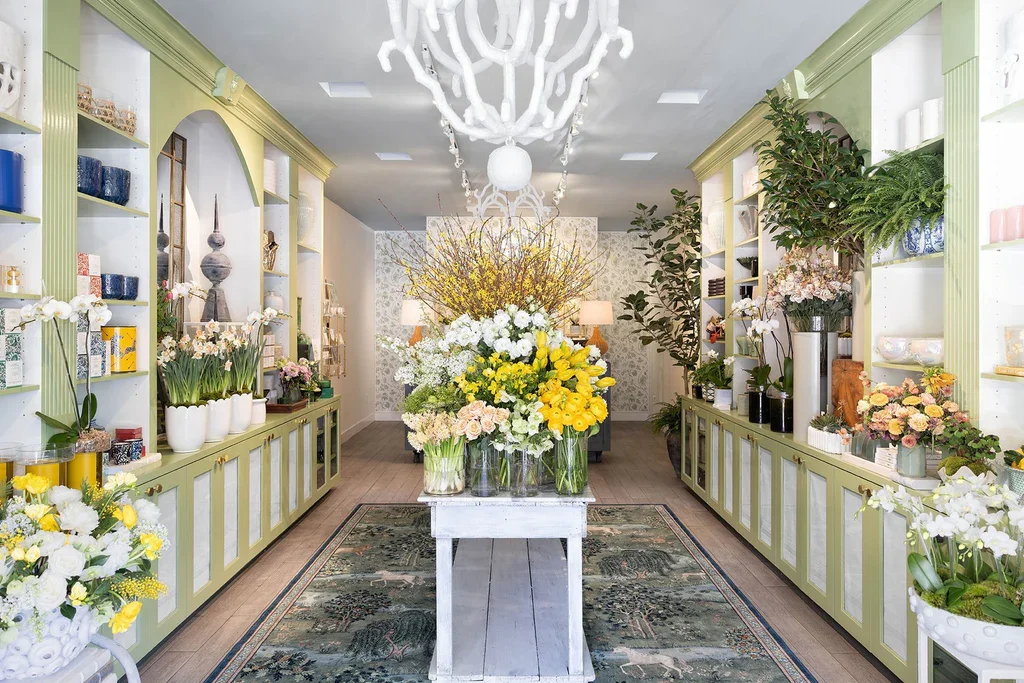
Florist shops are 300-600 sq ft on average, with over half of this space dedicated to storage, refrigeration, and work area. This leaves very little retail room. While space is often limited, perfume brands have a high price point product which overlaps well with the buying habits of people already walking into florist shops.
Perfume also has the advantage of taking up very little shelf space. This makes the perfume category a good potential candidate for inventory expansion at any floral shop.
Independent Stores
The majority of florist shops are independently owned.
How does this benefit you?
The process of buying shelf space at a store like Sephora is going to be much more arduous than buying shelf space at a flower shop that has 3 employees and the business owner. In many cases, you might be able to call a florist shop and speak directly with the owner who will be making the buying decisions.
The Cons of Florist Shops Selling Perfume
Florist shops prioritize selling their perishables, relegating the small remaining shelf space to more relevant goods like cards, balloons, and planters. Your perfume will always be a last priority. Especially if the sales volume doesn’t justify the allocated shelf space.
You also cannot expect to drive a substantial amount of sales from local florist shops. People go to florists with a very specific need. They are thinking about buying flowers, not perfume. Any florist shop owner will tell you there is a reason most florist shops don’t expand their inventory categories; they don’t want to look like a gift shop and would prefer offering more flower selections rather than more lotions and perfumes.
How to Make the Most From Selling to Florist Shops
Align buying behavior with product offerings. We have established that perfume and flowers are both very giftable items. How does this translate to your perfume? Include a small branded gift box for your perfume. Through visual merchandising, you can display the perfume and the gift box next to the bottle so the consumer knows they can buy the perfume and it will be ready to gift immediately when they walk out.
Depending on your perfume brands’ product line, gift baskets can be a great way to optimize sales by matching buying intent. If your fragrance brand also sells artisanal soaps, skin creams, candles, etc then bundling these into a pre-wrapped gift basket might incentivize sales by offering a more complete gift giving experience.